User Tools
This is an old revision of the document!
Table of Contents
Travel with Dogs
Air Travel
It is not recommendable to put a dog alone into the hold, between other animals, strange smells and loud noises.
Therefore, only cabin transport is acceptable. Many airlines allow small dogs to fly in cabins, so long as they’re in a carrier under the seat in front of you.
Begin with only short flights, and slowly increase the distance/duration.
Bring treats to the trip. Portable/collapsible water bowl for your dog. Portable food bowl for your dog and a small amount of food in a baggie inside your carry-on luggage: This is especially important in case your flight gets delayed.
Get the dog accustomed to the crate before taking off. Play typical airport and flight noise already at home. Visit airports already before any trip. Have familiar toys and small win the crate. Hydrate the dog the day before the trip but reduce food and water appropriately before the trip.
Once you’re through security, most airports have pet relief areas, so be sure to make time for your dog to relieve themselves. While waiting to board your flight, you may be able to have your dog out of their carrier to stretch their legs.
Once you and your dog are on your flight, your dog will need to stay in their carrier. Dogs aren’t permitted to sit on their owner’s lap. It can be helpful to give your dog a chew to comfort them during the most turbulent and noisy parts of the flight. Chewing helps to naturally relax your dog, and can also help them adjust to the pressure changes associated with takeoff and landing.
prepare your dog for the experience of flying. Expose your dog to their crate early, so they’re comfortable and familiar with being in a carrier for long periods of time. Let your dog explore their crate at home where they feel safe and pair going into the crate with praise and treats.
Night flights avoid pit stops.
Have a pee mat with you.
- Poop bags
- Pet wipes: These are a great option for easy cleanup if your dog gets sick while traveling.
- A chew for your dog: This can be especially helpful for dogs during takeoff and landing to help make the pressure changes more comfortable for them.
Confirm if your dog can fly with you where you’re traveling, and determine if there are quarantine, vaccine, or other restrictions on dogs entering that area. Proof of vaccinations: Check to see if you’ll need to have a health certificate signed by your veterinarian. Even if it’s not required, it can be useful to have these documents with you, just in case. Be sure to check the entry requirements, including information about quarantines for any destinations where you and your dog will be flying.
Iberia is pretty representative for airline I would use, such as Lufthansa, Air France, British Airways, Air Europa. Iberia tends to be at the lower (safer) side of the limits.
The dog can travel in the cabin if it meets the conditions explained below. You must show proof of compliance to the agent at the check-in desk, who will fill in the official IATA form.
A maximum weight of 8 kg = 17,5 pounds, including the container. There are suitable containers available for around 3 pounds / 1,5 kg.
That leaves 14 pounds = 6,5 kg for the dog .
- The maximum container size is 45 cm (length) x 35 cm (width) x 25 cm (height), and the sum of these dimensions must not exceed 105 cm.
Crate Sizing Guide
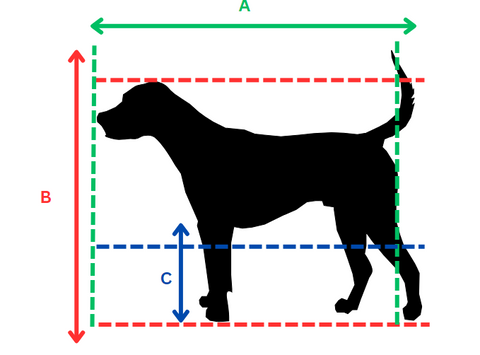
It's essential to choose the right-sized crate for your pet. Your pet carrier should provide enough space for your pet to stand, turn around comfortably, sit upright, and lie down in a natural position. This is a general guideline only; for specific requirements and approvals, please check with your airline.
{{https://cdn.shopify.com/s/files/1/0721/7387/9546/files/Crate_sizing_side_480x480.png?nolink&}}
- Length of Your Pet (A) While your pet is standing, measure from the tip of their nose to the base of their rump in a straight line (measurement A). Be sure not to include the tail.
- Total Height of Your Pet (B) & Front Leg Length (C) To measure height, measure from the bottom of your pet’s front paw to the top of their head (B) while they are standing, making sure to include the ears. This is crucial, as airlines will check that your pet can stand upright in the crate without lowering their head. Next, measure one of your pet's front legs from the bottom of the paw to the chest (C). This helps determine the crate length required for them to lie down comfortably. * Width of Your Pet (D) Measure the width of your pet across their shoulders. This will help ensure they have enough space to turn around inside the crate. * Weight of Your Pet It's also important to know your pet's weight, as crates have a maximum weight capacity. With all these measurements, you can now determine the appropriate size crate you need. To determine the best crate for your pet’, compare the measurements you’ve gathered with the internal dimensions of the PP range of pet crates. * Crate Length: Add the length of your pet (A) plus half of the front leg length (C). * Crate Width: Double the shoulder width (D) and add 5 cm. * Crate Height: Add 5 cm to the total height (B). For example, for a dog that is 45 cm long, with a leg length of 18 cm, 17 cm wide at the shoulders, and 45 cm tall, the calculations would be: * Crate Length: 45 cm + half of 18 cm (9 cm) = 54 cm * Crate Width: 17 cm × 2 + 5 cm = 39 cm * Crate Height: 45 cm + 5 cm = 50 cm Lastly, confirm that your pet does not exceed the maximum weight for the selected crate. * The pet crate must be well constructed and ventilated (at least 16% of the total surface of the four sides), with a safe, leak-proof floor and soft sides able to be compressed. * You are responsible for the pet travelling with you and you must ensure that it does not provide inconvenience to nearby passengers. In addition, your pet must remain inside the container for the duration of the flight. * We do not accept animals with special characteristics, e.g., a strong odour, etc., that may provide inconvenience to other passengers and the crew. * For safety reasons, you cannot travel with your pet in a seat next to the emergency exit. * Only one cat or small dog** in the cabin is allowed per passenger.
- In most cases, your pet must be at least 10 weeks old and fully weaned.
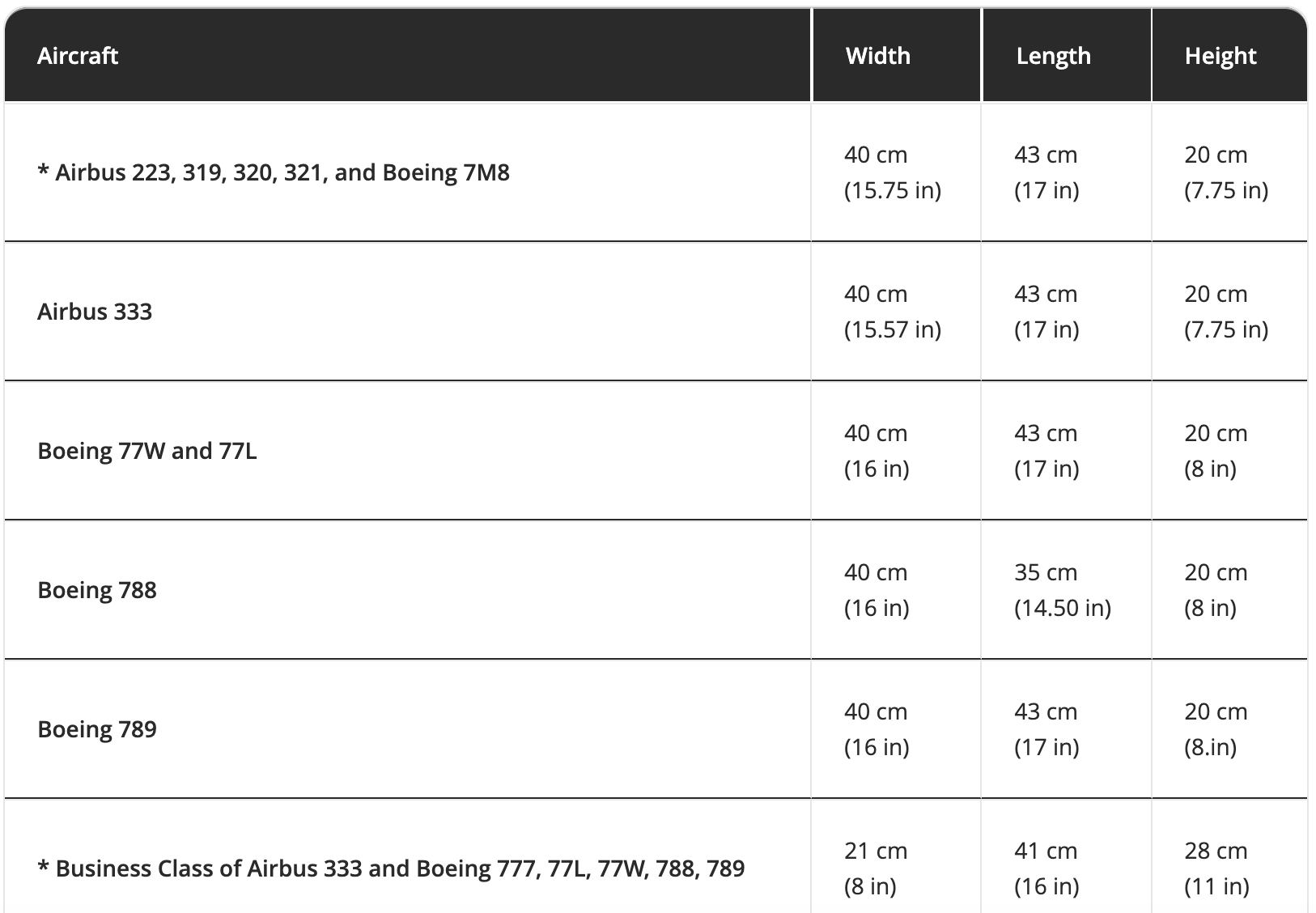
- Some airlines have varying size limits depending on the plane, e. g. Air Canada has the following limits: